May. 21, 2026
In industrial production, municipal pipeline systems, and energy transportation networks, valves serve as the core control component of fluid systems. Their sealing performance directly affects operational safety, energy efficiency, equipment reliability, and long-term system stability.
The commonly used industry expression “Run, Overflow, Drip & Leak” refers not to one single fault, but to four different types of leakage phenomena. Each differs in leakage intensity, occurrence location, and potential risk. Only by accurately identifying the leakage type can effective prevention and corrective action be implemented.
“Run” describes a large-volume, rapid leakage of media from the valve body or pipeline connection.
This is typically caused by:
Valve body damage
Excessive system pressure
Improper operation
Structural failure or rupture
For example, when a steam valve fails, high-temperature steam may violently discharge from the system, causing:
Massive energy loss
Equipment shutdown
Personnel injury risks
Serious operational hazards
In high-pressure systems, this type of leakage can escalate into a major safety accident within seconds.
“Overflow” refers to media escaping from the top of equipment or valves, usually caused by:
Liquid level control failure
Safety valve malfunction
System overpressure
Improper feeding operation
For instance, improper reactor charging may cause process liquid to overflow through the manhole or vent area, leading to:
Environmental contamination
Chemical exposure risks
Production instability
Although less violent than “Run,” overflow incidents still represent a major process safety concern.
“Drip” describes slow media seepage from locations such as:
Flange connections
Packing glands
Threaded joints
Gasket sealing surfaces
Common causes include:
Gasket aging
Loose fasteners
Worn sealing surfaces
Corrosion damage
A small oil drip from a corroded flange gasket may appear insignificant, but long-term exposure can result in:
Accelerated equipment corrosion
Environmental pollution
Increased maintenance costs
Minor leakage is often the beginning of major valve failure.
“Leak” refers to continuous media leakage caused by:
Casting defects
Cracked welds
Packing failure
Structural porosity
Damaged sealing components
For example, even a tiny leakage from a natural gas valve packing area may gradually accumulate into an explosive gas mixture if left undetected.
Compared with “Drip,” this type of leakage is usually more persistent and potentially far more dangerous.
External leakage occurs when media escapes directly from inside the valve into the surrounding environment.
Typical leakage points include:
Packing glands
Flange connections
Valve body castings
Weld seams
External leakage is usually visible and easier to detect. However, its consequences can be severe when the media involved is:
High-temperature steam
Toxic gas
Flammable fluid
Corrosive chemicals
Potential risks include:
Personnel injury
Fire or explosion
Environmental contamination
Energy loss
Regulatory penalties
Internal leakage occurs when the valve is closed, but media still passes from the high-pressure side to the low-pressure side through damaged sealing surfaces.
Because the media remains inside the pipeline system, internal leakage is highly concealed and often difficult to detect without:
Pressure analysis
Temperature monitoring
Ultrasonic leak detection
Abnormal energy consumption analysis
Although not immediately visible, internal leakage can lead to:
Loss of control accuracy
Increased energy consumption
Continuous erosion of sealing surfaces
Premature valve failure
System instability
In critical process systems, internal leakage may even cause:
Safety valve malfunction
Process upset
Emergency shutdown failure
From years of field experience, valve leakage problems can generally be traced back to four major factors:
Incorrect material or sealing configuration is one of the most common root causes.
Examples include:
Using standard soft seals under high-temperature conditions
Applying ordinary carbon steel valves in corrosive media
This often leads to premature sealing failure.
Poor installation practices frequently create hidden leakage risks, including:
Uneven packing installation
Incorrect bolt tightening torque
Pipe misalignment
Improper flange assembly
Even a high-quality valve cannot perform properly if installation standards are ignored.
Long-term neglect significantly accelerates leakage problems.
Common issues include:
Aging packing not replaced
Damaged gaskets ignored
Poor lubrication
Internal debris accumulation
Without preventive maintenance, minor leakage gradually develops into major system failure.
Extreme operating conditions accelerate sealing surface wear, such as:
Pressure fluctuations
Thermal shock
High-temperature cycling
Media containing solid particles
These factors continuously damage valve sealing performance over time.
At KXC, leakage prevention starts long before the valve enters service.
We focus on the entire valve lifecycle — from engineering design and material selection to machining precision, pressure testing, and after-sales support.
KXC provides customized valve solutions based on:
Media characteristics
Pressure class
Temperature range
Corrosion level
Application environment
For demanding conditions, we recommend:
Metal-seated valves for high-temperature service
Stainless steel or alloy materials for corrosive media
Proper filtration systems to protect sealing surfaces
Every KXC valve undergoes:
Precision CNC machining
Controlled casting inspection
Surface finishing optimization
Pressure & sealing performance testing
Weld integrity examination
Critical sealing areas are carefully processed to improve long-term tightness and operational reliability.
Proper installation is essential for sealing performance.
KXC supports customers with professional installation recommendations, including:
Correct flange alignment
Proper packing arrangement
Uniform bolt tightening procedures
Hydrostatic and sealing tests before commissioning
KXC advocates preventive maintenance instead of reactive repair.
Regular inspection of:
Packing glands
Flanges
Sealing surfaces
Actuation systems
can significantly extend valve service life and reduce unexpected downtime.
Valve “Run, Overflow, Drip & Leak” may begin as a small issue, but their impact can extend to:
Production safety
Energy efficiency
Environmental compliance
Operational costs
Equipment reliability
At KXC, we believe true valve quality is not only about flow control — it is about long-term sealing stability and dependable performance under real industrial conditions.
Through scientific design, strict quality control, and professional engineering support, KXC helps customers reduce leakage risks, improve operational safety, and achieve more stable and efficient system performance.
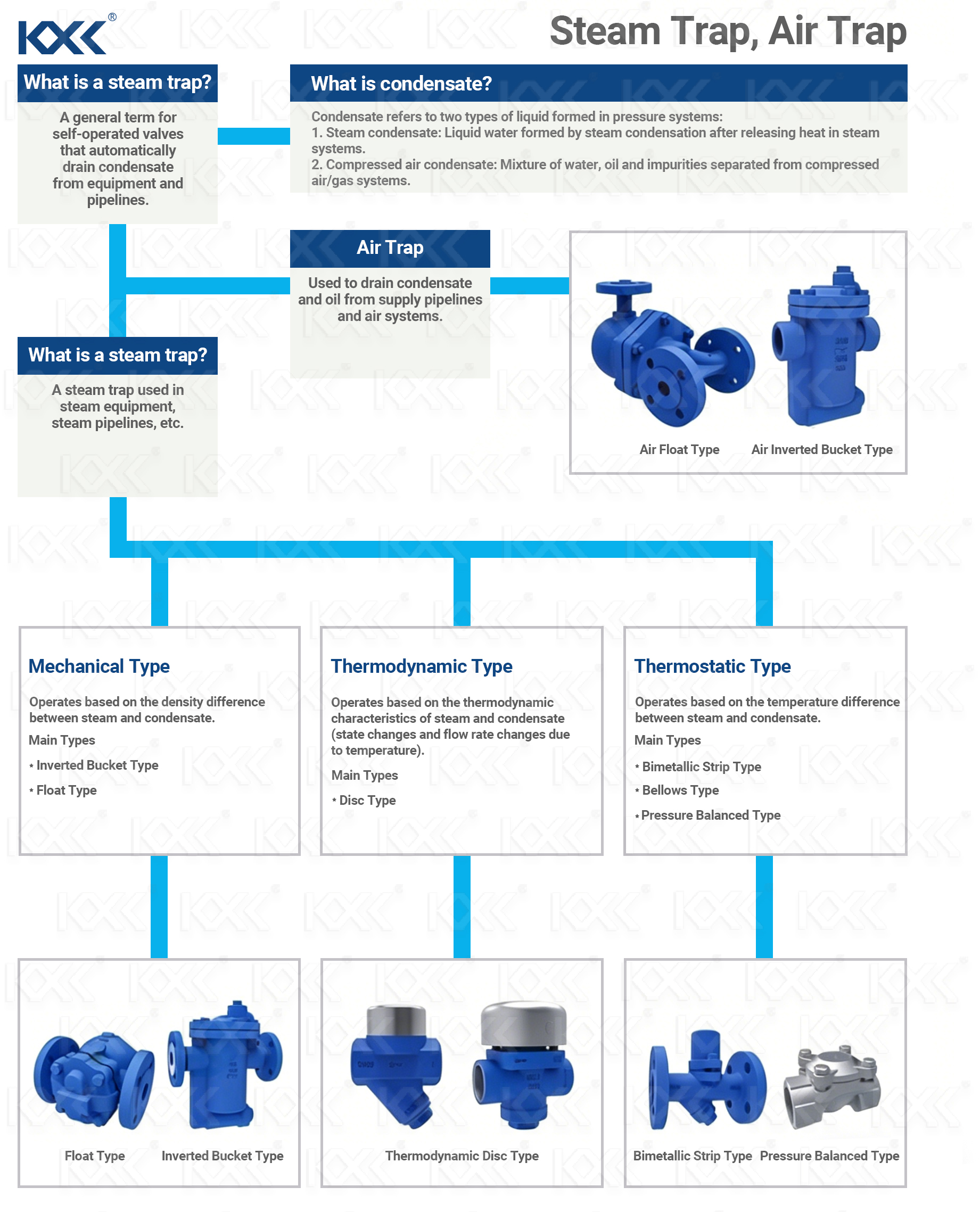
Steam Trap Are You Using the Right Type
May. 25, 2026
Understanding Valve “Run, Overflow, Drip & Leak”
May. 21, 2026