May. 25, 2026
In any industrial steam system, effective condensate removal is essential. Poor condensate management not only reduces thermal efficiency but also leads to significant energy loss, water hammer risks, and potential damage to pipelines and equipment.
Selecting the right steam trap plays a critical role in maintaining system stability, improving energy efficiency, and ensuring long-term operational reliability.
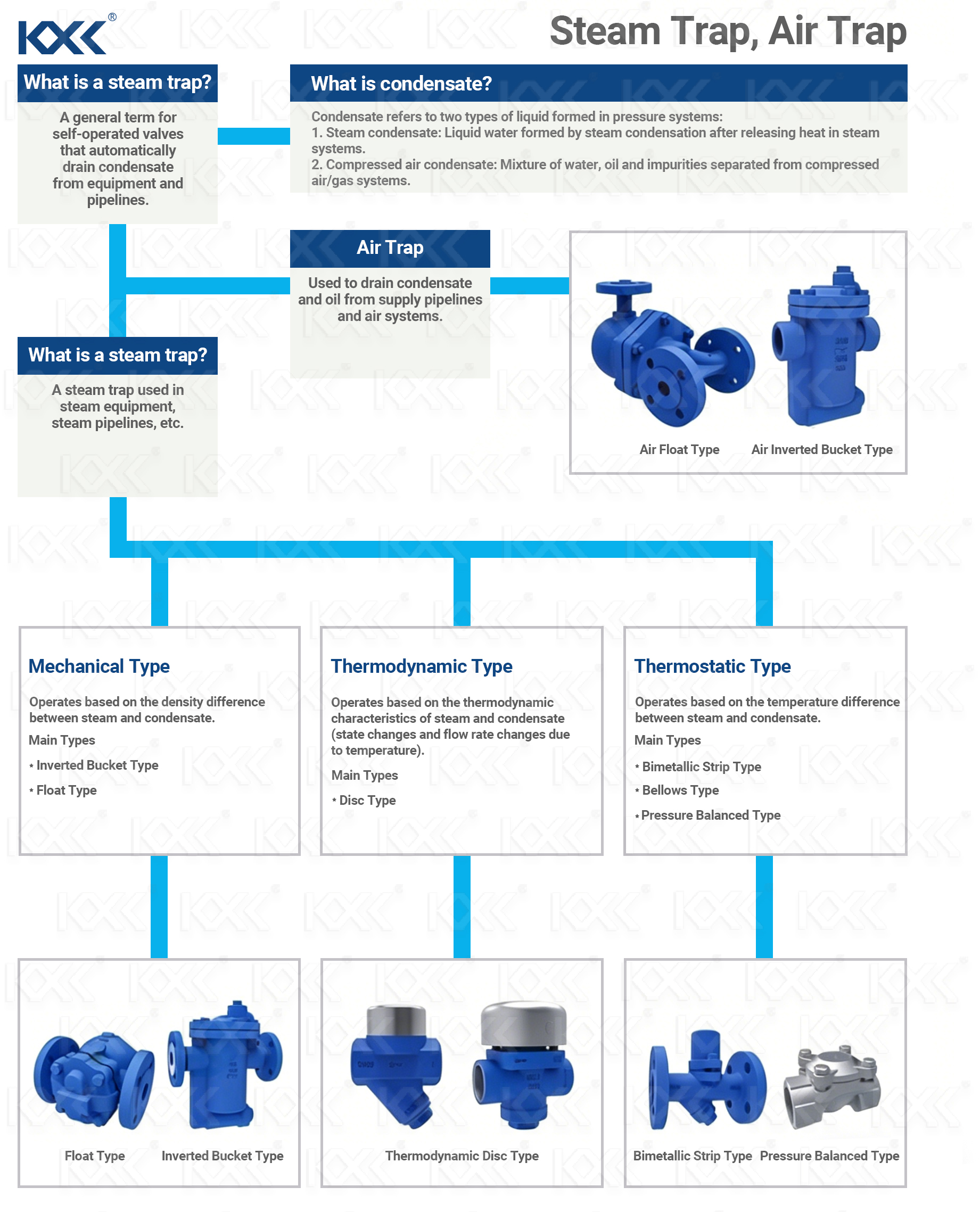
Below is a clear overview of the three main types of steam traps and their applications:
Mechanical steam traps operate based on the density difference between steam and condensate. As condensate accumulates, the float or bucket mechanism responds accordingly to discharge liquid while preventing steam loss.
Common types:
Inverted Bucket Steam Trap
Float Type Steam Trap
Best suited for:
Continuous condensate discharge and systems with stable or medium-load conditions
Thermodynamic steam traps function based on the difference in velocity and pressure between steam and condensate. The disc inside the trap reacts to pressure changes, enabling rapid and compact operation.
Common type:
Disc Steam Trap
Best suited for:
High-pressure systems, outdoor installations, and applications requiring compact design and durability
Thermostatic steam traps operate according to temperature differences between steam and sub-cooled condensate. They open or close based on thermal expansion elements such as bimetallic strips or bellows.
Common types:
Bimetallic Steam Trap
Bellows Type Steam Trap
Best suited for:
Applications requiring precise temperature control, air venting, and energy recovery systems
Choosing the correct steam trap is essential for optimizing system performance. A properly selected trap can:
✔ Prevent live steam loss and reduce energy waste
✔ Improve overall thermal efficiency of the system
✔ Minimize maintenance costs and downtime
✔ Extend the service life of pipelines and equipment
At KXC Valve, we provide reliable steam system solutions designed for industrial applications, including high-performance steam traps suitable for different working conditions.
Previous: None
Steam Trap Are You Using the Right Type
May. 25, 2026
Understanding Valve “Run, Overflow, Drip & Leak”
May. 21, 2026